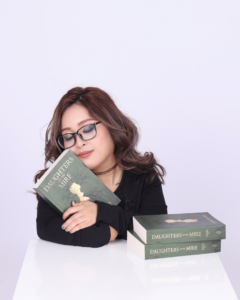
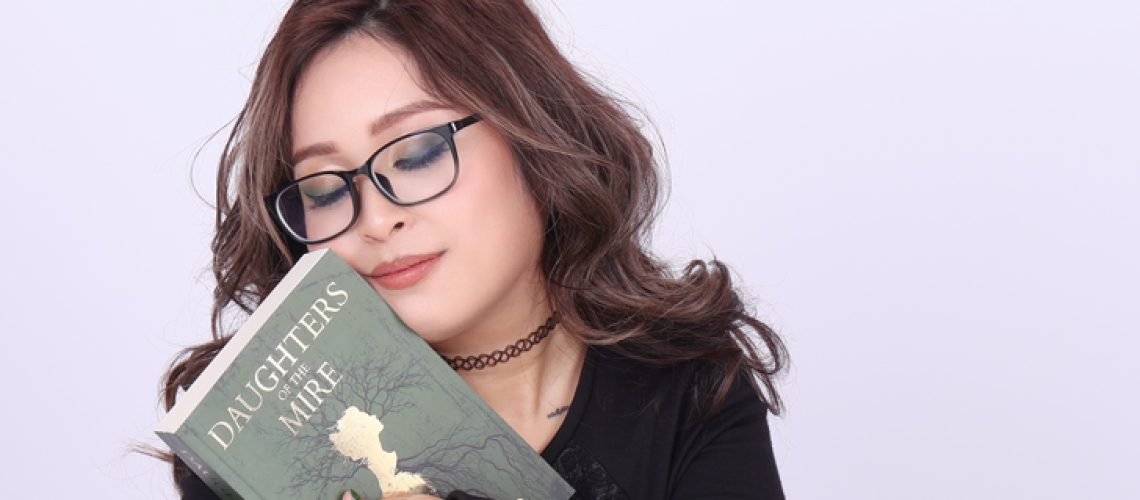

Shareen Ho is a Malaysian writer with a background in journalism, PR, and marketing. After years in advertising, she turned to storytelling, a passion rooted in her lifelong love of books. Living with dwarfism has shaped her resilience and outlook, and through her writing she hopes to give voice to women’s struggles, pain, and resilience. Daughters of the Mire is her debut novel, born from a dream that refused to let go.
Today, we sit down with Shareen to understand her thoughts and perspectives while writing Daughters of the Mire.

1. Why did you write Daughters of the Mire?
A psychological thriller novel was not what I expected to write for my first book. The thriller novel inspiration came from hearing so many real stories about trauma and abuse that people struggle to talk about.
With Daughters of the Mire, I wanted to tell a dark thriller book that explores those experiences through the journeys of the two main characters. My hope is that readers who have gone through something similar might feel a little less alone.
2. What is the main message you’d like to give to readers?
As an emotional thriller novel, the message I hope readers take away is empathy. The story deals with themes of trauma and resilience, and I want readers to understand the emotional journeys the characters go through.
Like many books about trauma and resilience, it touches on difficult experiences through psychological fiction themes. Some readers might begin the story thinking, “she asked for it,” but by the end I hope they realise that it is never the victim’s fault.
3. Many thrillers use women’s trauma as narrative fuel. How did you ensure that your characters’ suffering was not instrumentalized, but instead transformative or agentic?
In many feminist thriller books, trauma can sometimes be used for shock value, and that was something I wanted to avoid. Daughters of the Mire draws on trauma in fiction inspired by real stories shared by women around me.
I wanted it to feel more like women empowerment fiction, where the characters confront what happened to them and refuse to stay silent. Their journeys are dark, and the outcomes are not always hopeful. But that honesty felt important to me, because not every story of suffering ends in healing. Sometimes the hardest endings are the most truthful ones.
“…that honesty felt important to me, because not every story of suffering ends in healing.”
4. In a story about womanhood, who defines power?
In this women empowerment fiction story, the reality is quite simple. The men hold the power. Set between the 1920s and 1940s, that imbalance is just part of the world the women live in.
Through these feminist literature themes and the way women power in novels is explored, I wanted to show that abuse is never the result of a woman’s choices. It is not about what she wore, what she said, or where she went. The blame should never fall on the victim.
5. Were there moments you had to protect yourself emotionally while writing?
Yes, definitely. While writing trauma in fiction, there were moments I had to step away and take a break. Some parts of the story draw from my own experiences, the trauma of people close to me, and even true crime stories I have followed over the years.
Because of that, the author’s writing process became quite an emotional experience. Revisiting those themes was not easy, so taking pauses was necessary before continuing the story.
6. Do you see empowerment as reclaiming power or dismantling structures?
The feminist themes in fiction really come down to one thing for me. Empowerment is not just about reclaiming power. It is also about dismantling the structures that took that power away in the first place.
Many empowerment novels and women’s empowerment stories focus on women taking their power back. I believe that can only truly happen once the patriarchal systems that limit women are questioned and challenged. Only then can women begin to reclaim their voice and agency.
“Empowerment is not just about reclaiming power. It is also about dismantling the structures that took that power away in the first place.”
7. How did writing this book change your understanding of womanhood?
Writing the book did not change my understanding of womanhood so much as deepen it. Like many women, I grew up hearing questions like, “Why was she out alone?” or “Why was she wearing that?” Those assumptions appear often in stories about womanhood.
While writing one of my own books about womanhood, I realised how empathy often grows only after we experience trauma ourselves or hear it from people we love. Like many feminist fiction novels and women stories in literature, I hope the story helps readers understand that the responsibility is never on the victim.
8. If readers walk away unsettled rather than comforted, what should unsettle them?
As a dark psychological thriller, what I hope unsettles readers most is realising that the story is not just about the past. The characters may live in another time, but what they go through still happens today.
Like many disturbing thriller books and dark suspense novels, the tension comes from confronting uncomfortable truths. The most unsettling part is recognising that some of the horrors in the story are not just fiction. They reflect realities that many women still face.
“They reflect realities that many women still face.”
9. In thrillers, tension often comes from withheld information. In a story about abuse, silence can also be survival. How did you differentiate between narrative suspense and the politics of silence?
In the story, a lot of the psychological suspense comes from what the characters choose not to say. Communication is important, but when someone is dealing with dangerous men, silence can sometimes be a way to survive.
That balance was part of the challenge in the thriller storytelling. Like many suspense thriller novels, the tension grows from who knows the truth and who doesn’t. The story slowly unfolds through what is withheld, and the consequences of those silences.
10. What do you want readers to feel after finishing the book?
Like many of the best thriller books, I wanted to write a thriller book that makes readers think, not just follow the plot.
While writing, there were moments where I wanted readers to feel a sense of hopelessness, because that often reflects the reality many survivors face. In many emotional thriller novels, the endings are not always happy. But I also felt there needed to be some hope. In this story, that hope comes through the ‘daughters’, because sometimes the next generation is the one that finally breaks the cycle of trauma.
Thank you so much Shareen for your time for answering your questions, we are truly excited for your writing journey. #MalaysiaBoleh
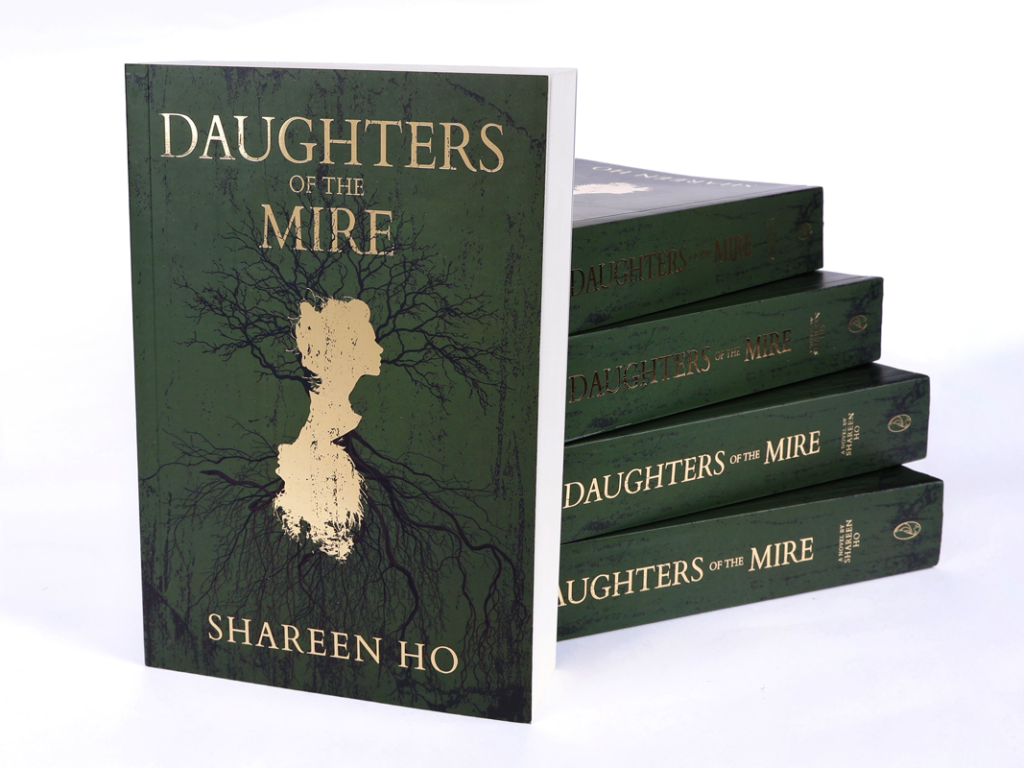
Daughters of the Mire is a haunting, gothic, Epistolary, 492- paged tale set in Willow’s Mire, where the Turner sisters are shrouded in whispers of miracles and monstrosities. As rumours blur truth and myth, the real story emerges through hidden diaries, letters, and fragments of the past, uncovering a chilling legacy of secrets, loss, and lives claimed by the mire. Bound by blood yet divided by what they conceal, the sisters are trapped in a history that refuses to stay buried, pulling them inexorably toward a dark and inescapable truth.
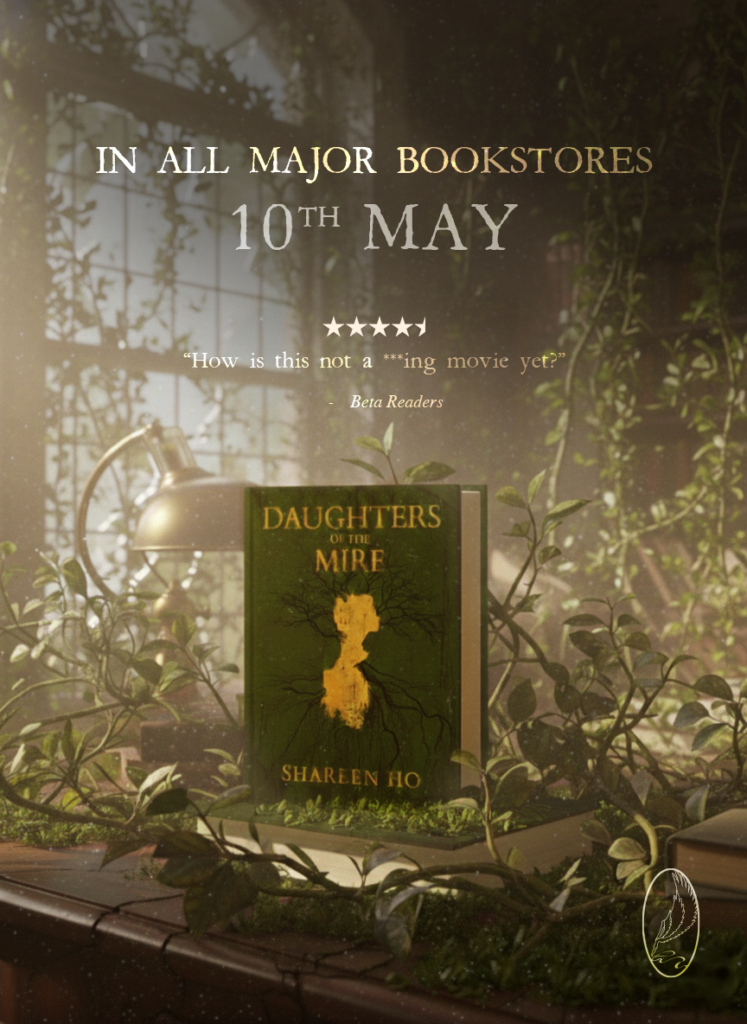
Add as want to read on #DTOM:
Follow @penwingspublishing and @shareen.author
Pre-orders open in April 2026.